
Best crypto apps in India for beginners should make three things clear: what you are buying, what it costs, and how you can withdraw your money or crypto later. A simple signup screen is helpful, but it is not enough to decide where to keep your funds.
In this guide, I compare Mudrex, CoinDCX, Delta Exchange, CoinSwitch, Bybit, SunCrypto, ZebPay, WazirX, Shark Exchange and Giottus from a beginner’s perspective. The comparison uses published platform information, fee schedules and support documentation. It is not a claim that I personally tested every app.
My approach is straightforward: start with your intended transaction, then choose the platform. Buying a small amount of Bitcoin, transferring coins to your own wallet and trading a leveraged futures contract are very different requirements.
Research checked: 15 October 2026. Fees, available payment methods, supported networks and account restrictions can change. Confirm the final details inside your verified account before transferring funds.
Risk note: Crypto prices can fall sharply, and platforms introduce custody and operational risks. This comparison is educational and does not promise returns or certify any exchange as safe.
Also Read:
Best Crypto Apps in India for Beginners: Quick Comparison
This table is organised by the decision each app requires. It is not a ranking from safest to least safe.
| App | What to evaluate | Main beginner consideration |
|---|---|---|
| Mudrex | INR spot buying and investment products | Check standard trading fees and the separate cost of external crypto withdrawals. |
| CoinDCX | INR buying and selling | Crypto withdrawal eligibility is a separate question from INR withdrawal access. |
| CoinSwitch | INR purchase and sale workflow | Its PRO crypto-deposit page currently states that crypto withdrawals are unavailable. |
| Giottus | INR spot trading and supported crypto transfers | Withdrawal access depends on verification, asset and network status. |
| SunCrypto | INR spot markets and available purchase options | Confirm current external-wallet withdrawal support for your chosen asset. |
| ZebPay | Exchange trading and Quick Trade | Compare product-specific fees and the membership fee applicable to inactive accounts. |
| Bybit | Spot markets and broader trading tools | Verify India-specific funding routes and charges; global features may differ. |
| Delta Exchange | Spot, futures and options | Select the correct product. Derivatives are not equivalent to buying coins. |
| WazirX | Current trading services and pricing plans | Consider its security and restructuring history alongside current operations. |
| Shark Exchange | Crypto futures and options | Primarily relevant to derivatives trading, rather than a first buy-and-hold purchase. |
How I Compare the Best Crypto Apps in India for Beginners
I would give more importance to these questions than to signup rewards or the number of coins advertised:
- Product: Am I buying crypto, or opening a contract linked to its price?
- Funding: Can I deposit INR using a method available to my account?
- Total cost: What are the trading fee, spread, taxes on fees and withdrawal charges?
- Exit route: Can I sell and withdraw INR? Can I separately transfer crypto out?
- Custody: Who controls the assets while they remain on the platform?
- Records: Can I download transaction history and tax-related statements?
An app can be convenient for buying and selling within its platform while being unsuitable for someone who wants to move coins to a personal wallet. Neither requirement should be hidden behind a general “easy withdrawal” claim.
1. Mudrex: Check the Cost of Both Buying and Transferring
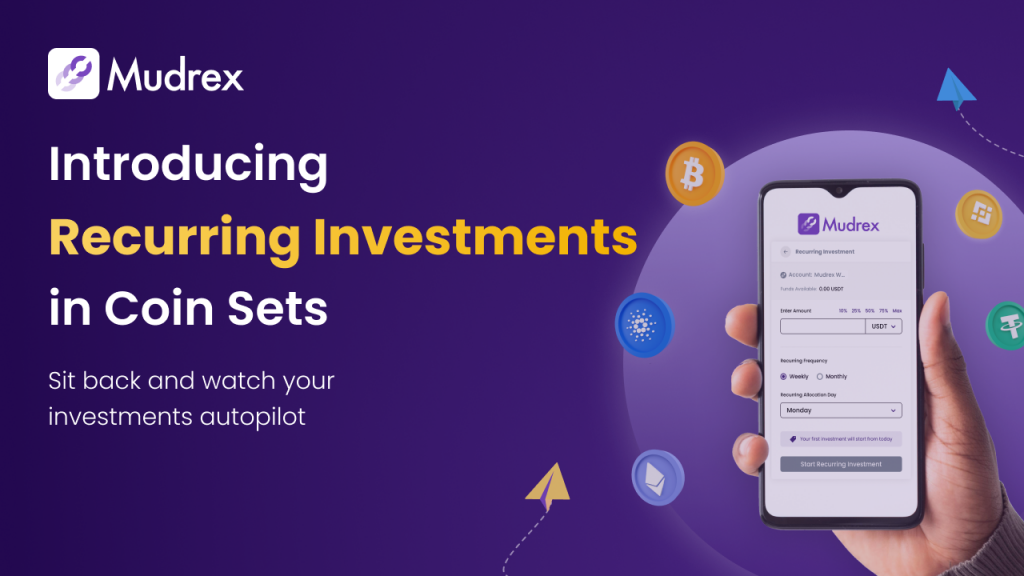
Mudrex offers INR spot purchases alongside other products. Its published fee schedule lists a 0.45% spot trading fee for the Non-Alpha tier, with lower rates at higher qualifying volumes. GST applies to trading fees.
The same schedule lists zero platform fees for INR deposits and withdrawals, but a separate crypto withdrawal charge of 2%, with a minimum of US$0.50, inclusive of GST.
My assessment: Mudrex is worth evaluating for an INR-based purchase workflow. However, someone planning frequent transfers to an external wallet should calculate the withdrawal cost before buying.
Coin Sets and futures have their own costs and risks. Do not assume that a fee quoted for one Mudrex product applies to every other product.
Check Mudrex’s official fee schedule.
Read the full review: Mudrex App Review – Invest Smarter in Crypto, Indexes & SIPs
2. CoinDCX: Separate INR Withdrawals from Crypto Withdrawals
CoinDCX advertises INR deposits and withdrawals without platform charges. Its support centre also documents a separate crypto-withdrawal process involving eligibility checks and supporting information.
That distinction matters if you intend to move purchased coins to another exchange or your own wallet. Being able to withdraw rupees does not establish that your account can withdraw every cryptocurrency.
My assessment: Include CoinDCX in an INR spot-buying comparison, but check the fee shown for your selected purchase route and confirm external-transfer eligibility first.
Security history also belongs in the decision. CoinDCX disclosed a July 2025 operational-wallet incident and stated that customer wallets were unaffected and that it covered the exposure from its own reserves. That is the company’s account, not a guarantee against future incidents.
Sources: CoinDCX, crypto-withdrawal support, and security incident update.
Read the full review: CoinDCX App Review – India’s Most Trusted Crypto Exchange
3. CoinSwitch: Understand the External-Wallet Limitation
CoinSwitch provides purchase and trading routes, including CoinSwitch PRO. Compare the actual order preview rather than assuming that the price and fee are identical across every route.
The important limitation in the official documentation checked for this guide is that CoinSwitch PRO’s crypto-deposit page says crypto withdrawals are not supported at this time.
My assessment: Evaluate it for an INR buy-and-sell workflow if that is your goal. If withdrawing coins to your own wallet is essential, confirm that the required feature is available before funding the account.
A page discussing crypto withdrawal fees in general should not be treated as proof that the platform itself currently offers withdrawals.
Read CoinSwitch PRO’s deposit and withdrawal information.
Related guide: CoinSwitch Review: Is CoinSwitch Safe, Legal & Worth Using in India?
4. Giottus: Useful Fee and Network Details to Check

Giottus publishes separate fee rates for INR pairs and crypto pairs. Its regular-user tier lists 0.40% maker and taker fees for INR pairs, plus GST on fees.
Its withdrawal schedule also shows whether deposits and withdrawals are enabled for individual assets and networks, with enhanced due diligence relevant to withdrawal access.
My assessment: Giottus belongs in the comparison for readers evaluating INR spot markets. Its asset-level withdrawal table is particularly useful when external transfers matter.
Check the exact network, not just the coin name. A listed asset does not mean every transfer route is available.
Check Giottus trading fees and withdrawal status.
Read the full review: Giottus Review: Is Giottus Real or Fake? Complete Guide for Indian Crypto Users
5. SunCrypto: Check the Selected Market and Transfer Facility
SunCrypto offers spot markets alongside other products. Its fee page distinguishes product categories, so a futures fee should not be used as the cost of a beginner’s spot purchase.
For external crypto transfers, older support articles are not sufficient to establish what is available for your account today. Confirm the asset, network, eligibility conditions and fee in the current app or through official support.
My assessment: Evaluate SunCrypto’s INR purchase workflow and final execution price. If moving coins out is part of your plan, resolve that question before depositing.
See the official SunCrypto fee page. You can also read my SunCrypto review for additional context; verify any historical promotional offer separately.
6. ZebPay: Inactivity Costs Matter for Buy-and-Hold Users
ZebPay’s regular exchange tier lists 0.45% maker and taker fees. Quick Trade is priced separately, starting at 0.50%. These published trading fees exclude GST.
Another important cost is the membership fee. ZebPay describes a charge of 0.0001 BTC plus GST when an account is inactive for a full calendar month, subject to its waiver conditions.
My assessment: A beginner planning to buy once and leave the account untouched should understand this policy before choosing ZebPay. A fee denominated in BTC also changes in rupee value as Bitcoin’s price changes.
Do not make unnecessary trades simply to avoid a fee without comparing the total cost.
Sources: ZebPay pricing and membership-fee explanation.
7. Bybit India: Verify the Funding Route Before Comparing Fees
Bybit’s general fee guide lists a 0.10% maker and taker fee for non-VIP spot trading. That is a trading-rate reference, not the complete cost of funding, trading and withdrawing from India.
Available fiat methods vary by location and service provider. Check your verified Indian account for the actual payment route, applicable local charges and withdrawal options. Do not assume direct INR bank withdrawals are available just because the platform supports other fiat currencies.
My assessment: Bybit requires more careful navigation than a simple INR-only buying workflow. Beginners should distinguish spot trading from margin, futures and other advanced products.
Bybit also disclosed a major February 2025 security incident. Its history should be considered alongside its current controls, rather than treating size or popularity as proof of safety.
Sources: Bybit fees and security incident timeline.
8. Delta Exchange: Spot and Derivatives Need Separate Decisions
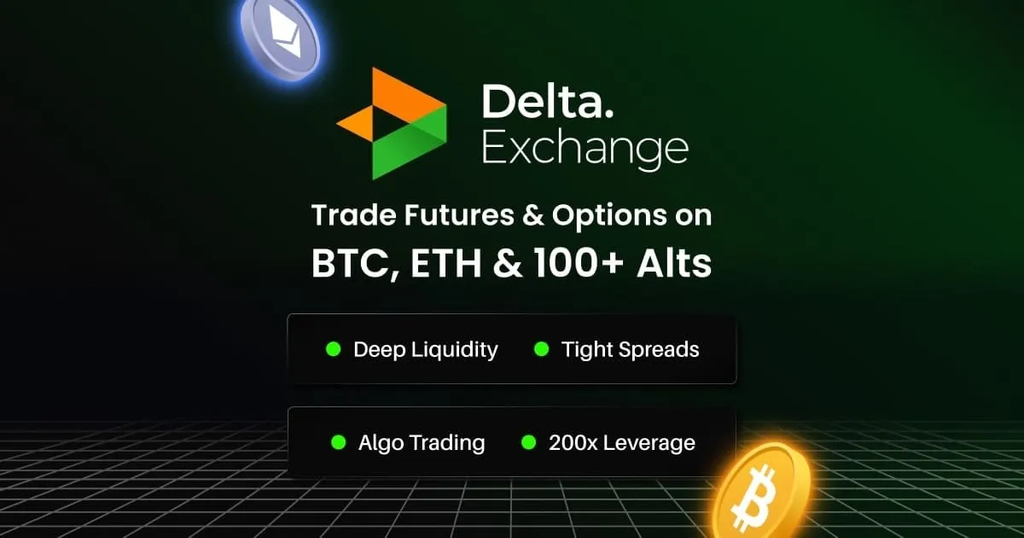
Delta Exchange’s current website lists spot trading alongside futures and options. Describing it as a derivatives-only platform would therefore miss its current product range.
However, opening a futures or options position is not the same transaction as buying crypto on the spot market. Derivatives require an understanding of contract size, margin, settlement and, where applicable, funding and liquidation.
My assessment: Beginners considering Delta should first identify the product they actually need. Evaluate its spot facility separately; treat derivatives as a later learning topic rather than the default first trade.
Its fee documentation notes that derivatives charges can be based on notional or order value. A small-looking percentage can therefore apply to a much larger amount than the margin deposited.
You can also Read the full Delta Exchange Review for additional context.
Check Delta Exchange’s current fee schedule.
9. WazirX: Current Operations and Platform History Both Matter
WazirX should not be assessed using only old descriptions of its suspended services. It announced a phased trading restart beginning on 24 October 2025 and has subsequently published updated product and fee information.
Its pricing includes a subscription model and a pay-per-trade alternative. A subscription is not automatically economical for someone making a few small purchases.
My assessment: Review its security incident and restructuring history, current withdrawal access and pricing together. A new trading offer does not replace that due diligence.
Existing users should also distinguish current trading balances from any legacy recovery-related entitlements. Check current official announcements for the specific asset and account situation.
Sources: WazirX restart announcement and revised pricing explanation.
10. Shark Exchange: Primarily a Derivatives Comparison
Shark Exchange’s published product and fee information centres on crypto futures and options. Its futures schedule lists maker and taker charges, with separate funding and liquidation considerations.
My assessment: It belongs in this guide because readers may encounter it while researching crypto apps. However, I would not present a leveraged derivatives position as a substitute for a beginner’s first spot purchase.
Before trading, a user should be able to explain the contract’s value, margin requirements, funding mechanism and potential loss. Low trading fees do not make a leveraged product low risk.
Sources: Shark Exchange fees and risk disclosures.
What Does a Small Crypto Purchase Actually Cost?
When comparing the best crypto apps in India for beginners, use the same purchase amount and compare the quantity of crypto you would receive.
Here is an illustrative example, not a quote from a particular app:
| Item | Calculation |
|---|---|
| Order value | ₹1,000 |
| Assumed trading fee | 0.50% = ₹5 |
| GST on that fee | 18% of ₹5 = ₹0.90 |
| Total trading charge | ₹5.90, before any other applicable cost |
If charges are added to the order value, the payment would be ₹1,005.90. If ₹1,000 is your total budget, the app may instead deduct charges from it. The order preview should explain which method applies.
Also compare the execution price. An app with a smaller stated fee can still deliver fewer coins if its quoted purchase price is less favourable.
INR Withdrawal and Crypto Withdrawal Are Not the Same
INR withdrawal means moving an available rupee balance to your bank account. Crypto withdrawal means transferring a supported asset to an external blockchain address.
For crypto transfers, check the network, minimum amount, fee, address requirements and verification restrictions. A successful bank withdrawal does not test the external-wallet route.
If you choose self-custody, you become responsible for protecting recovery information and using the correct address and network. It removes some exchange-custody dependence but introduces responsibilities of its own.
FIU Registration, Security and Taxes: What Beginners Should Understand
FIU-IND registration concerns reporting and compliance obligations under India’s anti-money-laundering framework. It should not be interpreted as government approval of an investment, a guarantee of platform solvency or protection against losses.
Check the operating entity behind the app and its current disclosures. Security badges and proof-of-reserves claims should be assessed for their scope; they are not substitutes for understanding custody and withdrawal conditions.
The Income Tax Department states that income from transferring virtual digital assets is generally taxed at 30%, plus applicable surcharge and cess, with restricted deductions. TDS obligations can also apply. Tax treatment depends on the transaction and relevant rules; do not assume that spot transfers and every derivatives product are treated identically.
Keep purchase records, sale records, fees and TDS statements. Tax deducted during a transaction is not necessarily the final tax liability.
Official resources: FIU-IND and Income Tax Department’s VDA guide.
My Practical Shortlisting Approach
For a first INR spot purchase, I would begin by comparing the actual workflows and quotes on CoinDCX, CoinSwitch, Mudrex, Giottus and SunCrypto. This is a functional shortlist, not a declaration that these platforms are equally safe or equally cheap.
If external-wallet transfers matter, make that a pass-or-fail requirement before comparing signup offers. If you plan to trade infrequently, check inactivity or subscription costs. If you need derivatives, evaluate them separately from spot investing.
The best crypto apps in India for beginners are the ones whose costs, product mechanics and exit routes the reader can understand before committing money.
Conclusion
Choosing among the best crypto apps in India for beginners requires more than comparing logos, referral rewards or advertised trading fees.
All ten platforms covered here deserve different questions. CoinSwitch’s documented withdrawal limitation, ZebPay’s inactivity policy, Mudrex’s crypto-transfer charge and the derivatives focus of platforms such as Shark can materially affect the decision.
Choose the transaction you want to make, verify the complete cost, check the exit route and understand custody risk. A platform should earn its place through that process—not simply by appearing first in a “top 10” list.
Frequently Asked Questions
Which crypto app is best for a beginner in India?
There is no universal winner. Compare INR funding, the final purchase quote, withdrawal access, custody arrangements and support. The best fit for an INR buy-and-sell user may be different from the best fit for someone who needs external-wallet transfers.
Can I start with ₹100 or ₹500?
That depends on the platform, asset and minimum order size. Check the minimum and final fee before paying. A small amount is not risk-free, and withdrawal minimums may be higher than purchase minimums.
Is a free crypto app free to use?
A free download does not mean free transactions. Trading fees, spreads, taxes on fees, subscriptions, inactivity charges and withdrawal costs may apply.
Can I withdraw crypto from every app?
No. Availability can depend on the platform, verification level, asset and network. CoinSwitch PRO’s official page checked for this guide states that crypto withdrawals are unavailable.
Are Delta Exchange and Shark Exchange suitable for beginners?
Product choice matters. Delta currently lists spot trading alongside derivatives, while Shark’s published offering focuses on futures and options. Beginners should not confuse derivatives contracts with simply purchasing coins.
Does FIU registration mean my money is guaranteed?
No. Registration relates to compliance obligations. It does not guarantee investment returns, custody security or uninterrupted access to funds.
Should I choose an app because of its referral bonus?
Compare the product, fees and withdrawal conditions first. A promotional benefit may be small compared with the costs or restrictions you encounter later.